Korean Bibimbap
Highlighted under: Traditional Collection
Korean Bibimbap is a vibrant and hearty dish that brings together a colorful array of vegetables, tender meat, and perfectly cooked rice, all topped with a fried egg and a spicy gochujang sauce.
Korean Bibimbap is not just a meal; it's a beautiful representation of Korean culinary art. Each ingredient is carefully prepared and arranged to create a feast for the eyes and palate alike.
Why You Will Love This Recipe
- A harmonious blend of flavors and textures
- Customizable to suit your taste preferences
- Healthy and packed with nutrients
A Colorful Medley of Ingredients
Korean Bibimbap is not just a meal; it’s a culinary canvas showcasing a vivid assortment of fresh ingredients. Each component adds its unique color, flavor, and texture, making it visually appealing and nutritious. From vibrant greens like spinach to the bright orange of carrots, this dish is a feast for the eyes as well as the palate.
The beauty of Bibimbap lies in its versatility. You can customize the ingredients based on seasonal availability or personal preferences. This allows you to experiment with different vegetables, proteins, and toppings, ensuring that each bowl is uniquely yours while still adhering to the traditional essence of the dish.
Nutritional Benefits
Bibimbap isn’t just about flavor; it’s also a health powerhouse. The assortment of vegetables provides essential vitamins and minerals, while the rice offers a satisfying base that fuels your body. The inclusion of protein, whether it’s ground beef or tofu, ensures that you’re getting a balanced meal that keeps you full and satisfied.
Moreover, the spicy gochujang sauce not only adds a kick but also contains beneficial probiotics. This combination of fresh ingredients and bold flavors makes Bibimbap a nourishing choice for anyone looking to maintain a healthy lifestyle without sacrificing taste.
Perfect for Any Occasion
Korean Bibimbap is ideal for a variety of dining occasions. Whether you’re hosting a casual family dinner or impressing guests at a gathering, this dish is sure to please. Its vibrant presentation and customizable nature make it suitable for everyone, including vegetarians and meat lovers alike.
Additionally, Bibimbap is a great option for meal prep. You can prepare the components ahead of time and assemble them when you're ready to eat. This means you can enjoy a delicious, home-cooked meal even on your busiest days, making it a practical choice for modern life.
Ingredients
Ingredients
For the Bibimbap
- 2 cups cooked white rice
- 1 cup spinach, blanched and chopped
- 1 cup bean sprouts, blanched
- 1 carrot, julienned
- 1 zucchini, julienned
- 1 cup shiitake mushrooms, sliced
- 1/2 lb ground beef (or tofu for a vegetarian option)
- 4 eggs
- Sesame oil, for drizzling
- Salt, to taste
For the Gochujang Sauce
- 2 tablespoons gochujang (Korean red chili paste)
- 1 tablespoon sesame oil
- 1 tablespoon sugar
- 1 tablespoon rice vinegar
- 1 teaspoon soy sauce
Feel free to adjust the vegetables and proteins according to your preferences.
Instructions
Instructions
Prepare the Gochujang Sauce
In a small bowl, whisk together the gochujang, sesame oil, sugar, rice vinegar, and soy sauce. Set aside.
Cook the Beef
In a skillet over medium heat, cook the ground beef until browned. Season with salt and set aside.
Sauté the Vegetables
In the same skillet, sauté the zucchini and carrots until tender. Remove from heat and set aside.
Fry the Eggs
In a separate pan, fry the eggs sunny-side up until the whites are set but the yolks are still runny.
Assemble the Bibimbap
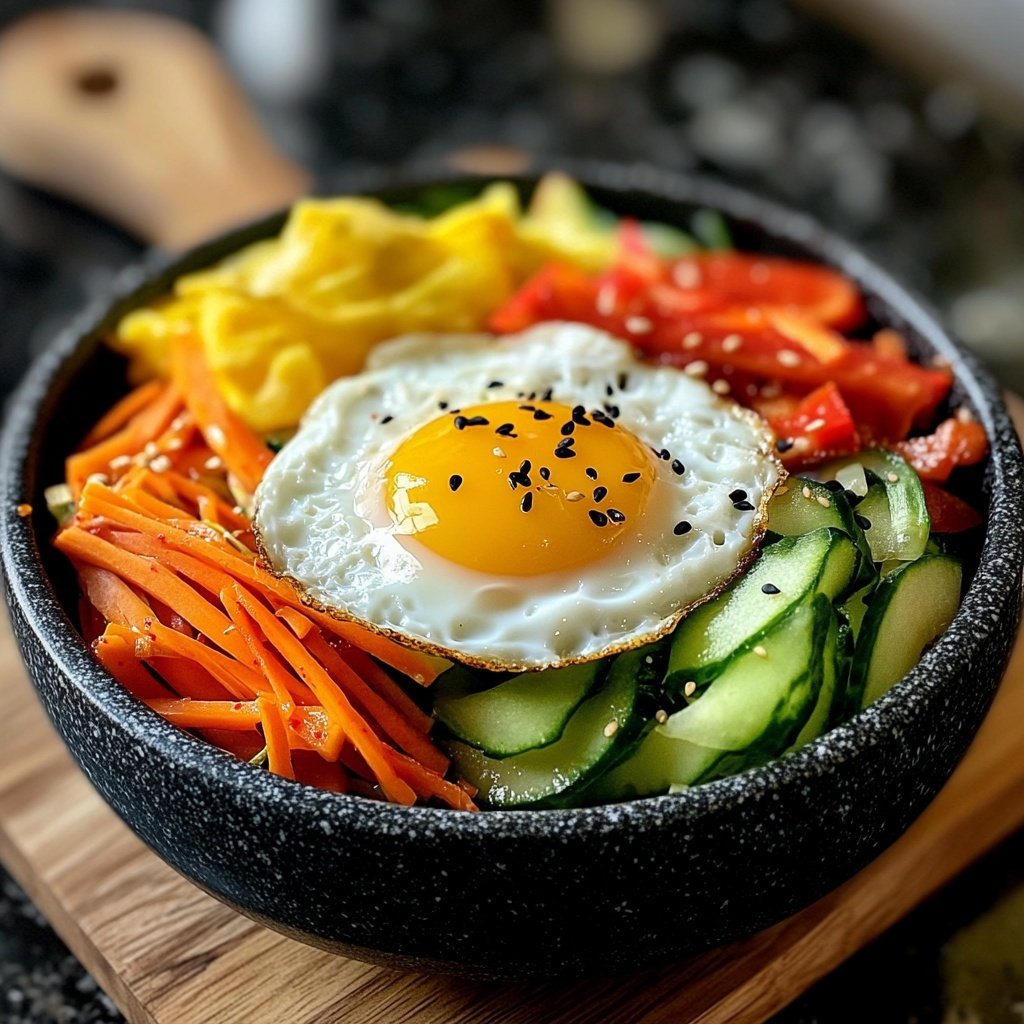
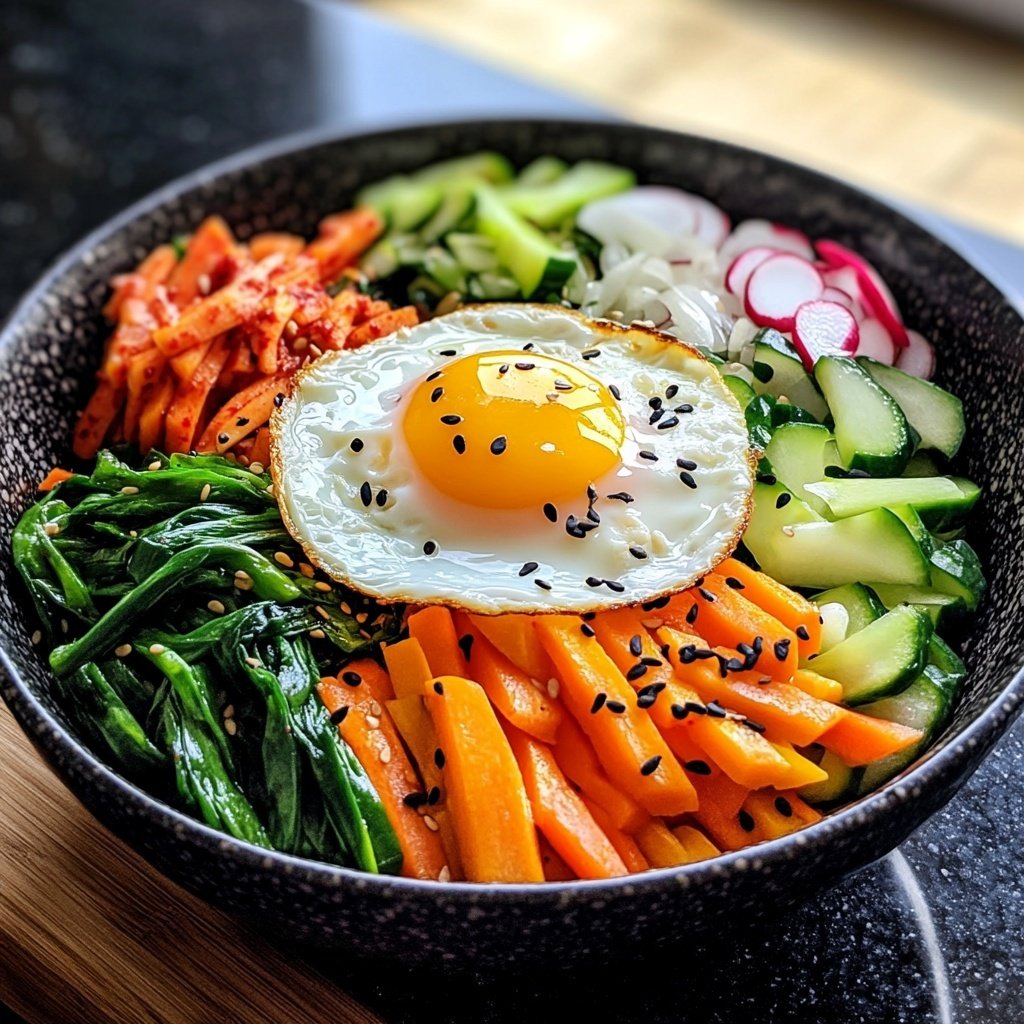
In a bowl, place the cooked rice at the bottom. Arrange the spinach, bean sprouts, sautéed vegetables, and ground beef over the rice. Top with a fried egg and drizzle with sesame oil and gochujang sauce before serving.
Mix everything together just before eating for the best flavor!
Pro Tips
- For added flavor, you can include other vegetables like radishes or bell peppers. Adjust the spiciness of the gochujang sauce according to your taste.
Tips for the Best Bibimbap
To achieve the best flavor in your Bibimbap, ensure that your vegetables are cooked properly. Each vegetable should be cooked just until tender, retaining a bit of crunch to add texture to the dish. This ensures that you experience a delightful contrast with the soft rice and runny yolk from the fried egg.
If you want to elevate your Bibimbap further, consider adding a mix of sesame seeds and chopped scallions as a garnish. These simple additions can enhance the dish’s flavor profile and add an extra layer of visual appeal, making your meal even more enticing.
Serving Suggestions
For an authentic experience, serve your Bibimbap in a hot stone bowl, known as 'dolsot'. This not only keeps the dish warm but also creates a delightful crispy rice layer at the bottom. Your guests will appreciate the unique texture and warmth that this traditional serving method provides.
Pair your Bibimbap with traditional Korean side dishes like kimchi or pickled vegetables. These accompaniments not only enhance the meal but also introduce additional flavors that complement the Bibimbap beautifully, rounding out your dining experience.
Storage and Reheating
If you have leftovers, store each component separately in airtight containers in the refrigerator. This helps preserve the freshness and texture of the ingredients. When you’re ready to enjoy your Bibimbap again, simply reheat the rice and protein, and freshen up the vegetables if needed.
For best results, avoid reheating the egg; instead, fry a fresh egg to top your reheated Bibimbap. This will ensure that you maintain the delicious runny yolk that is characteristic of a perfect Bibimbap, adding richness to every bite.
Questions About Recipes
→ Can I make Bibimbap vegetarian?
Yes! Simply replace the beef with tofu or additional vegetables.
→ What type of rice should I use?
Short-grain white rice or brown rice works best for Bibimbap.
→ Can I prepare the ingredients in advance?
Absolutely! You can prepare the vegetables and sauce ahead of time for quick assembly.
→ What is the best way to serve Bibimbap?
Serve it hot and mix all the ingredients together just before eating for a delicious experience.
Korean Bibimbap
Created by: Briony Ashcroft
Recipe Type: Traditional Collection
Skill Level: Intermediate
Final Quantity: 4 servings
What You'll Need
For the Bibimbap
- 2 cups cooked white rice
- 1 cup spinach, blanched and chopped
- 1 cup bean sprouts, blanched
- 1 carrot, julienned
- 1 zucchini, julienned
- 1 cup shiitake mushrooms, sliced
- 1/2 lb ground beef (or tofu for a vegetarian option)
- 4 eggs
- Sesame oil, for drizzling
- Salt, to taste
For the Gochujang Sauce
- 2 tablespoons gochujang (Korean red chili paste)
- 1 tablespoon sesame oil
- 1 tablespoon sugar
- 1 tablespoon rice vinegar
- 1 teaspoon soy sauce
How-To Steps
In a small bowl, whisk together the gochujang, sesame oil, sugar, rice vinegar, and soy sauce. Set aside.
In a skillet over medium heat, cook the ground beef until browned. Season with salt and set aside.
In the same skillet, sauté the zucchini and carrots until tender. Remove from heat and set aside.
In a separate pan, fry the eggs sunny-side up until the whites are set but the yolks are still runny.
In a bowl, place the cooked rice at the bottom. Arrange the spinach, bean sprouts, sautéed vegetables, and ground beef over the rice. Top with a fried egg and drizzle with sesame oil and gochujang sauce before serving.
Extra Tips
- For added flavor, you can include other vegetables like radishes or bell peppers. Adjust the spiciness of the gochujang sauce according to your taste.
Nutritional Breakdown (Per Serving)
- Calories: 500 kcal
- Total Fat: 20g
- Saturated Fat: 6g
- Cholesterol: 200mg
- Sodium: 600mg
- Total Carbohydrates: 60g
- Dietary Fiber: 5g
- Sugars: 5g
- Protein: 20g